01
What makes yarn suitable for a Mochila bag?
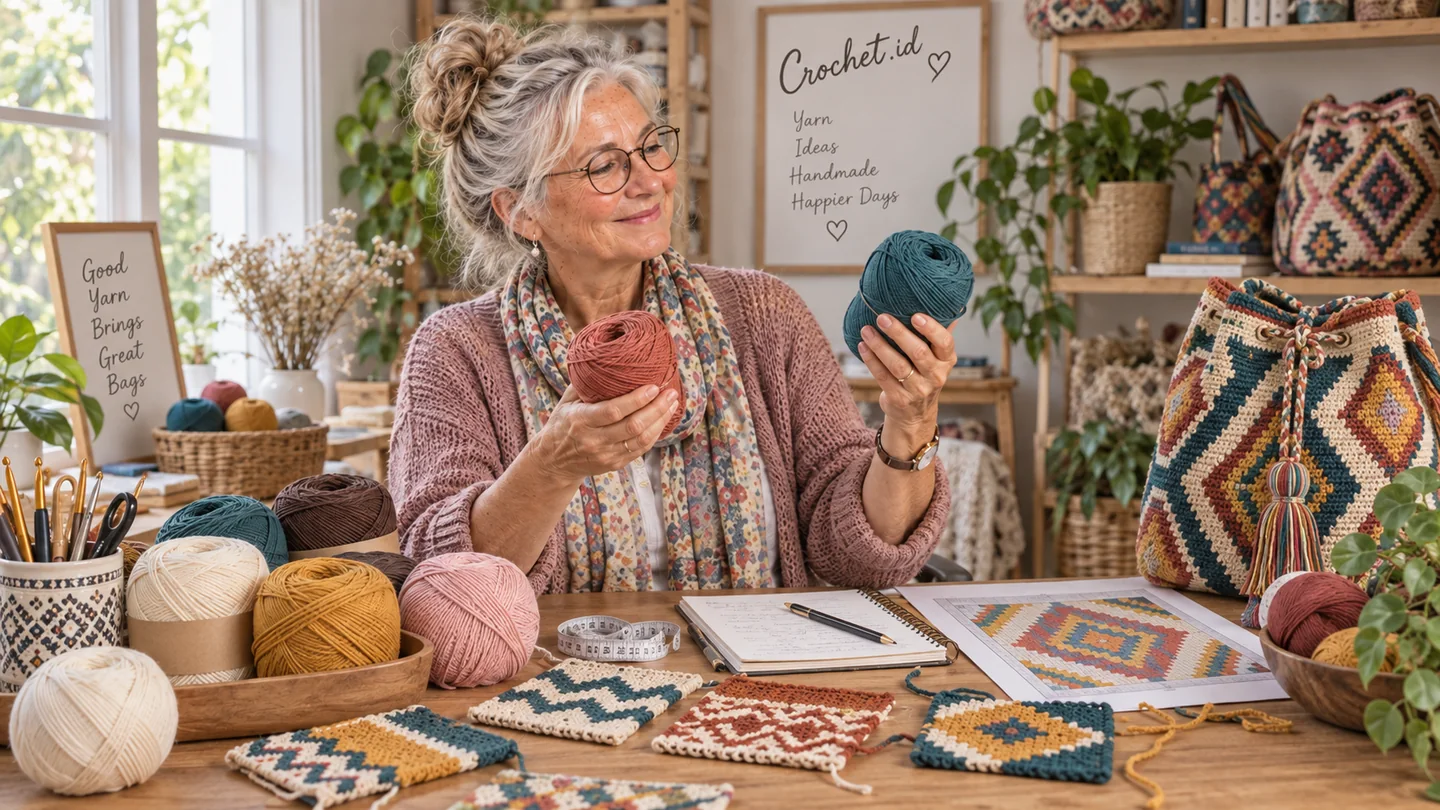
Mochila bags are often worked densely in tapestry crochet with multiple colors. Consistent yarn makes color changes easier to manage and geometric shapes easier to read.
Check surface smoothness, strength, twist, color range and care instructions. The finished fabric should feel structured enough for a bag without becoming uncomfortably stiff or heavy.
02
Cotton, mercerized cotton and blends
Cotton is available in many colors and can produce defined stitches. Its limited stretch can make changes in hand tension more visible; dense fabric can also feel heavy. Handle a swatch to judge comfort and structure.
Mercerized cotton has been treated to change the fiber surface and add luster. That sheen can highlight color and stitch detail, but it does not automatically make a yarn a better fit: weight, twist and swatch results still matter.
Cotton blends can change the feel, drape, care and stretch of the yarn. Read the fiber content and care label, then evaluate it in the tapestry pattern you plan to use. CottonWorks explains mercerized cotton yarn ↗.
03
Yarn weight and finished bag size
Yarn thickness affects a bag’s dimensions, weight, fabric density and yarn use. With the same stitch count, thicker yarn can make a larger bag; thinner yarn may create a lighter or less structured fabric.
Yarn-weight categories and suggested hooks are starting points, not universal rules. Follow the pattern guidance and compare a swatch with your target gauge. See the Craft Yarn Council yarn-weight standards ↗.
04
Twist, smoothness and stitch definition
A well-twisted yarn is often easier to work repeatedly and less likely to split in dense stitches. A smooth surface helps color boundaries and geometric shapes look crisp. The result also depends on stitch technique and consistent tension.
Try a few tapestry stitches in two contrasting colors. Notice whether the yarn unplies, fuzzes or catches when a color is carried inside the fabric.
05
Test a swatch before making the whole bag
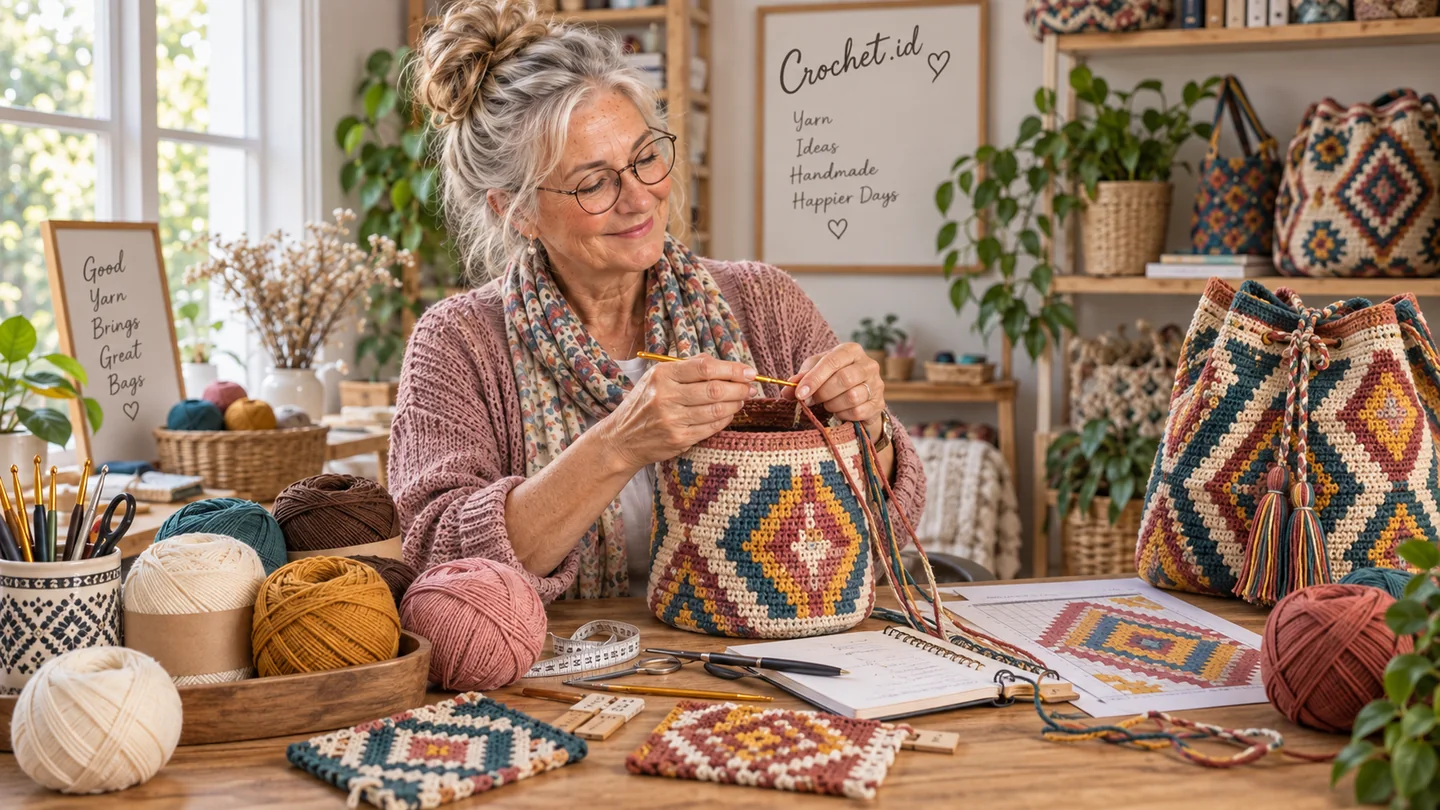
Make a small sample using the same stitch, color count and color-change technique as your project. A basic swatch may not show the density and stiffness of tapestry bag fabric.
Check motif clarity, stitch consistency, hand comfort, fabric flexibility, splitting and tidy color transitions. Measure the sample after caring for it according to the label. The Craft Yarn Council recommends swatching and comparing gauge because results vary with yarn, hook and tension.
06
How much yarn will I need?
Yarn use depends on bag size, yarn weight, pattern, number of colors, stitch density and personal tension. If your pattern provides an estimate, use it as a starting point and consider extra yarn from the same dye lot.
Measure your swatch and enter the results in the calculator for a project-specific estimate.
Estimate yarn for your project →07
Match yarn to a Mochila pattern
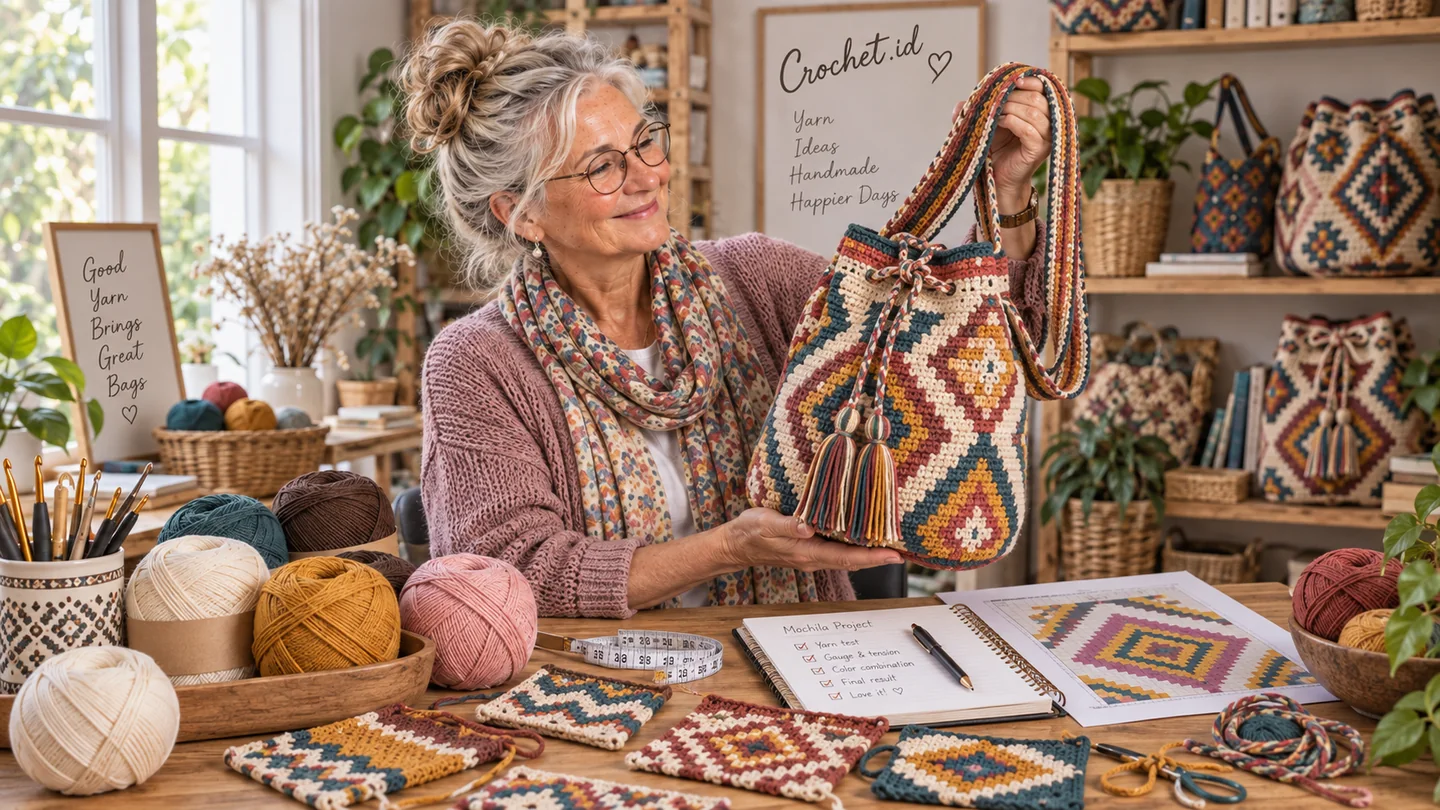
Before changing yarn, compare your swatch with the pattern gauge. The same stitch count does not guarantee the same bag size when yarn thickness or tension changes. Adjust from a measured swatch rather than a guess.
Start a motif in the Mochila Designer or browse the Mochila Pattern Collection for inspiration.
Buying checklist
- Fiber content and care instructions are clear.
- The surface is smooth, twist is firm and stitches are easy to see.
- The required colors are available with consistent dye lots.
- The tapestry swatch feels comfortable and structured enough for a bag.
- Swatch gauge matches the pattern or the pattern has been adjusted.
- Meterage/yardage is sufficient; check dye lots before buying.
Frequently asked questions
Is cotton always the best choice for a Mochila bag?
Not always. Cotton is popular for its color range and clear stitches, but construction, weight, thickness and swatch results matter more than fiber name alone.
Is mercerized cotton stronger?
Mercerization changes the fiber surface and adds luster; do not treat it as the only measure of strength or suitability. Compare the label and your swatch.
Can I substitute a different yarn weight?
Yes, but dimensions, weight and yarn use may change. Swatch and recalculate the finished size before starting.
What hook size should I use?
Start with the yarn label and pattern instructions, then adjust based on a swatch. There is no universal hook size for every yarn and tension.
How do I keep color changes neat?
Test with contrasting colors, keep tension consistent and avoid pulling the carried strand tight inside the stitches.
How can I estimate yarn quantity?
Use the pattern estimate if available, then account for your swatch, bag size and stitch density. A yarn calculator can turn swatch measurements into a project estimate.
PRODUCT PICKS
Product picks will be added after verification
No products, specifications or merchant links have been verified for recommendation yet. Use this guide to compare labels and swatches for yourself.